
The Trade Desk’s CFO Is Out After Just 6 Months on the Job
Outgoing finance chief, Alex Kayyal, served at The Trade Desk for nearly six months and will remain on the company’s board through its 2026 annual shareholder meeting.Read More
Outgoing finance chief, Alex Kayyal, served at The Trade Desk for nearly six months and will remain on the company’s board through its 2026 annual shareholder meeting.Read More
The spot skewers outdated technology while introducing the business software company to a mass audience.Read More
You don’t need to be chronically online to have your social media feeds overtaken by TV’s Heated Rivalry. My 21-year-old niece, multiple work Teams chats, Donatella Versace, hetero hockey podcasters, […]Read More
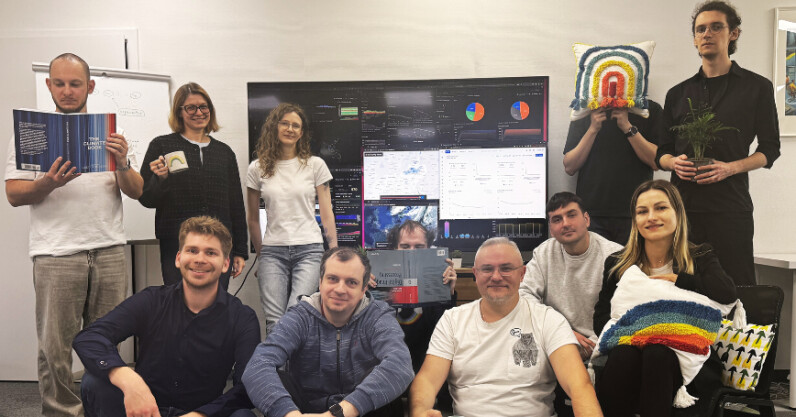
Warsaw, Poland 26 January 2026 – Rainbow Weather has raised $5.5 million in seed funding to push weather forecasting further into the short-term, high-precision territory it believes the industry still underserves. The Warsaw-based climate tech startup focuses on hyperlocal, minute-by-minute forecasts, zeroing in on what happens in the next few hours rather than days out. The round was backed by a syndicate of investors, including Yuri Gurski, founder of Flo Health, one of Europe’s best-known consumer tech unicorns. Rainbow Weather’s core product is a mobile app that delivers four-hour precipitation forecasts calculated from the exact moment a user checks the…
This story continues at The Next WebRead More
Most of us are terrible at some things.
Lack of skill, focus, practice, care or just temperament means that we don’t do the task as well as we might. This might be anything from promptness to conflict to high-stakes negotiation. It could include filling in forms, taking notes or brainstorming innovative ideas. Perhaps it’s living with uncertainty…
Once you realize your areas of terrible, choices arise:
The one that’s probably worth avoiding is: Accepting tasks and making promises and then quietly doing a terrible job.
Everything you need to know about this year’s upfront and NewFront presentations.Read More
The publisher teamed up with agency Code and Theory to blanket Los Angeles and San Francisco with a multichannel marketing blitz.Read More

1. EU launches “EU Inc” at Davos What: The European Commission unveiled EU Inc (“28th regime”), a single EU-wide legal company structure designed to let startups incorporate once and operate across all member states. Who it affects: European startups & scale-ups, founders, VCs, international investors. How: Reduces legal fragmentation, standardises corporate and investment structures, lowers friction for cross-border scaling. Impact timing: Strategic impact now (capital & expectations), real operational impact from 2027–2028. 2. EU moves to phase out “high-risk” tech suppliers from critical infrastructure What: The EU proposed mandatory rules to remove and replace technology from suppliers deemed “high-risk” in…
This story continues at The Next WebRead More
The brand sat out 2025’s Big Game after LA wildfires.Read More
One friend recently opened a bookstore instead of a bookmobile.
Another is investing two years of his life to open a restaurant instead of a series of pop up dinners.
And a third is buying a boat instead of chartering one.
It’s easy to see why. A real bookstore has a lease. They post their hours. It’s solid.
And a real restaurant, the kind we’ve all been to, looks, feels and smells like a restaurant.
Leaving the ridiculous economics of boat ownership aside, it’s worth taking a look at the first two.
The key questions are:
If the asset of the future is trust and attention, then it’s easy to do a new calculation. The purpose of getting a lease and a place on Main Street was to momentarily get the attention of passers by–and to earn their trust. After all, you’ve got a building.
But when we shift to a permission asset, when we cherish attention and use it to build trust over time, being on Main Street might not be the best way to achieve this.
The landlord gets paid regardless of whether the space does the job, and the upside is limited by the size of the space.
What happens to the life of a chef when they have 6,000 people who eagerly read their popup updates? When each person comes to two or three dinners a year, each held at a fascinating location, rented just for the night…
Instead of finding diners for their restaurant, they could create dining experiences for their diners.
The bookstore? Imagine a route, a series of partnerships with 50 or 100 organizations that value information and exploration. A curated selection of 400 books, ready to roll out at a community center, church or school…
In both cases, the hard work is earning attention and trust. It’s easy to avoid that when you’re passively sitting in a leased space waiting for people to come to you.
This applies to musicians, filmmakers or anyone who seeks to create magic.
Earn attention and trust. Spend time and money on that, and the rest will take care of itself.