
How Born Social Plans to Make Nikon Relevant to Gen Z Creators
The agency is getting ready to release its first work for the legacy camera brand as its social AORRead More
The agency is getting ready to release its first work for the legacy camera brand as its social AORRead More
Its newest launch will be the first new game to live as a standalone app, marking a key milestone for the news publisher.Read More
Omnicom Media will retain control of the CPG giant’s media business internationallyRead More
The KPop Demon Hunters star fronts the hydration brand’s promo ad ahead of its first Big Game appearance.Read More
On long-cycle R&D product development, and how creativity and AI leadership are shaping the future of play.Read More
The release comes as musicians push back on AI tools trained on copyrighted work without permission.Read More
Why do books and records have standard pricing? You’d think that a record from Miles Davis or Patricia Barber would cost more than one from the local garage band.
Economists tie themselves into knots trying to explain why wine and handbags have such wide price variation, but tickets to movies do not. They invoke “credence goods” and “focal point coordination” and “transaction utility” and “cost disease.” Darby, Karni, Schelling, Baumol, Thaler—a parade of Nobel-adjacent thinkers building elegant models to explain what’s sitting right in front of them.
It’s simpler than that, I think. People don’t go into publishing or music to make a profit (not most of them, not the smart ones). They do it to create culture and to be part of a culture. They’re not going to brag about making a lot of money, they’ll brag about finding art or sharing it.
Meanwhile, down the street at the hedge fund, the entire point is to find and capture price differences. Leaving money on the table isn’t just a missed opportunity—it’s an embarrassment. It means you weren’t paying attention.
The pricing norms in any industry reflect the identity of the people who built it.
Hermès could auction Birkin bags and make more money. They don’t, because scarcity-through-restraint is the elegant move, the identity-consistent move. It’s what people like them do.
Movie theaters were built by showmen who inherited vaudeville instincts: pack the house, give ’em a show, make it up on popcorn. Uniform ticket pricing isn’t economically optimal. It’s simply what people like us have always done.
This explains why industries are so stable—and why disruption feels like betrayal.
When concert tickets went dynamic, the backlash wasn’t about economics. It was moral outrage. Artists who adopted surge pricing weren’t just changing strategy; they were declaring themselves to be a different kind of person. The fans noticed.
Amazon didn’t share publishing’s allergy to profit. Ticketmaster didn’t share the old promoter’s loyalty to fans. They weren’t optimizing within the culture—they were violating it.
The price variation in any market reflects not what the market will bear, but what the people in that market can bear to charge.
The economists will keep building models. But if you want to understand why things cost what they cost, don’t ask what’s efficient. Ask what kind of person would be embarrassed to charge more. Or embarrassed not to.
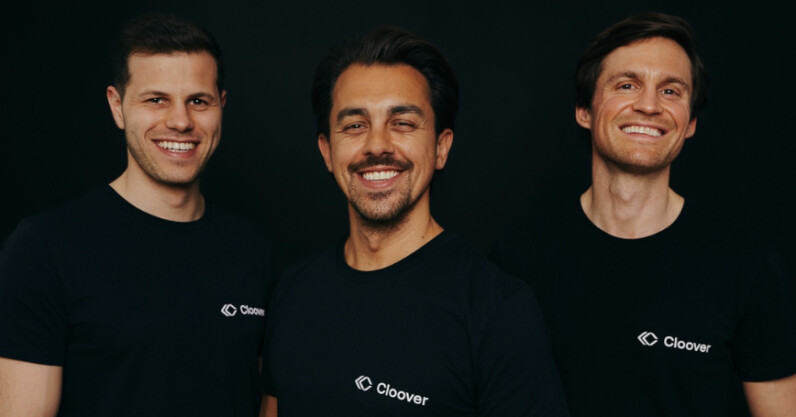
Berlin’s energy transition sector got a defining boost today as Cloover, a climate fintech based in Berlin, announced it has secured more than $1.2 billion in total capital commitments, combining Series A equity and a substantial debt facility to accelerate the rollout of its software and financing platform across Europe. The financing package includes €18.8 million (approximately $22 million) in Series A equity, led by MMC Ventures and QED Investors, with participation from Lowercarbon Capital, BNVT Capital, Bosch Ventures, Centrotec, and Earthshot Ventures. Alongside that, a €1.02 billion debt facility provided by a major European bank will be deployed directly…
This story continues at The Next WebRead More

To many readers, this may sound like a paradox: how can knowledge ever become invaluable? In this article, I want to explore how corporate knowledge, when poorly structured and rigidly transferred, can slowly transform from an asset into a disadvantage. Not only for companies, but especially for employees. And over time, that disadvantage compounds. The journey usually looks familiar. You apply for a job, speak with a recruiter, send your CV, go through interviews, and eventually receive the green-light email: “Congratulations, you’re hired.” This moment takes us directly to the real turning point: the onboarding process. Those first one, two,…
This story continues at The Next WebRead More
The retailer is using the tech startup’s ad server and mediation layer.Read More